Crocodiles of the open ocean: science, memory, and a Seychelles legend
When the first European seafarers approached the shores of the Seychelles more than 250 years ago, they were met with an unexpected and unsettling sight: crocodiles basking along the beaches and in shallow coastal lagoons. At the time, these predators were so common that they were mentioned in nearly every early account of the archipelago. To sailors accustomed to seeing crocodiles only in rivers and swamps, the image of massive reptiles lying on white coral sand beside the open ocean was deeply unsettling.
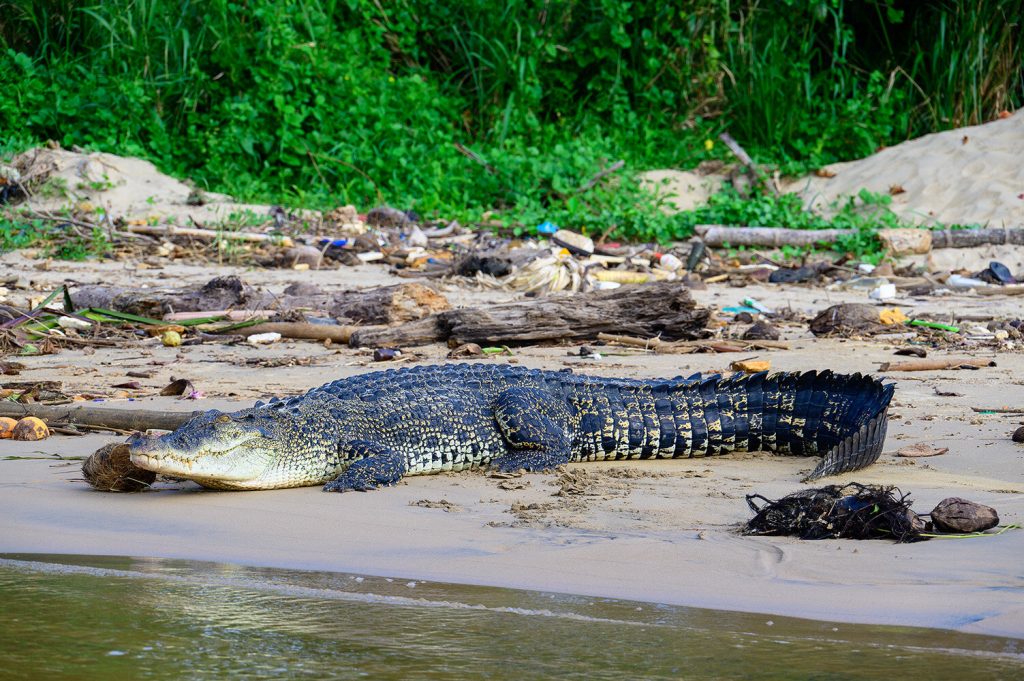
Today, this sounds almost like a legend—after all, not a single crocodile remains in the Seychelles.
After the first permanent settlement was established in 1770, the fate of the Seychelles crocodiles was sealed. Dangerous to people, livestock, and boats, they quickly became targets of systematic extermination. Firearms, traps, and organized hunts wiped them out with grim efficiency. Within just fifty years—by the early 19th century—crocodiles had vanished from the Seychelles entirely. This became one of the earliest and most complete examples of a large apex predator being eliminated by humans on oceanic islands.
For decades, a mystery lingered. Were these crocodiles a unique, island-evolved species—an endemic survivor of deep time? Or were they newcomers, occasional arrivals from distant shores? With no living animals left to study, scientists could only speculate.
The answer has emerged only recently, thanks to genetics.
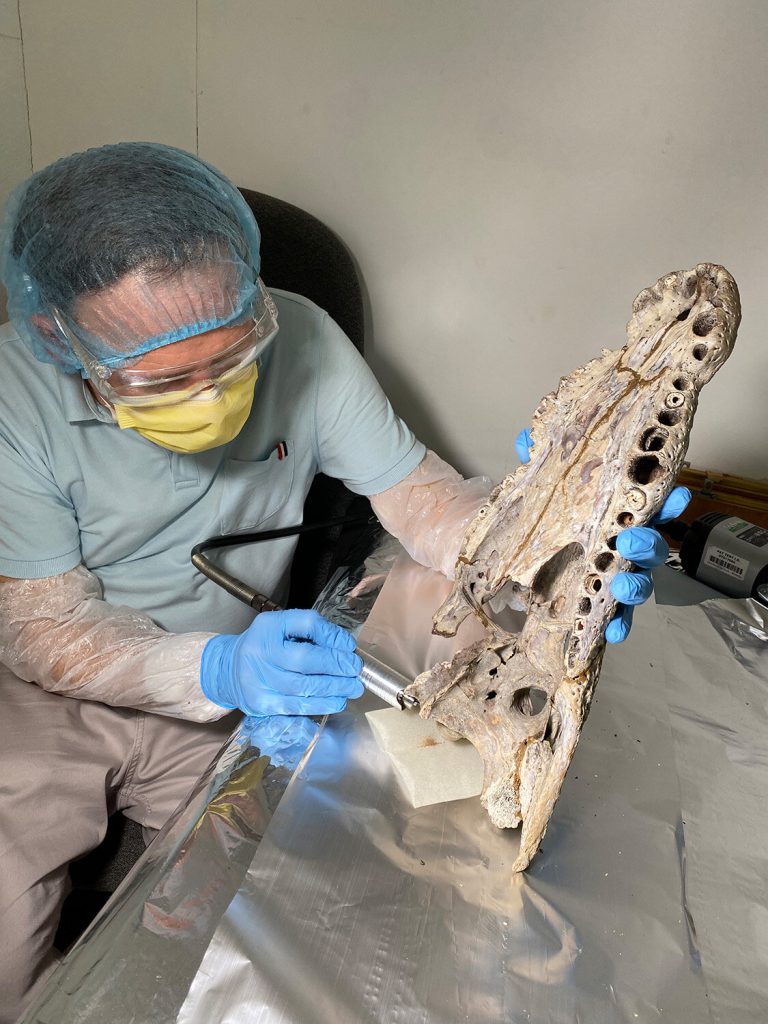
A new study published in Royal Society Open Science revealed that the Seychelles crocodiles did not represent a separate species. Instead, they were part of a vast—almost unimaginable in scale—population of the saltwater crocodile, Crocodylus porosus, the largest and most dangerous crocodile on Earth. Researchers from Germany and the Seychelles compared DNA from modern saltwater crocodiles with mitochondrial genomes extracted from historical museum specimens of the genus Crocodylus, including rare samples collected in the Seychelles more than two centuries ago.
These specimens had spent decades unnoticed in museum drawers, their significance overlooked—until modern genetic tools turned them into witnesses of an extraordinary past.
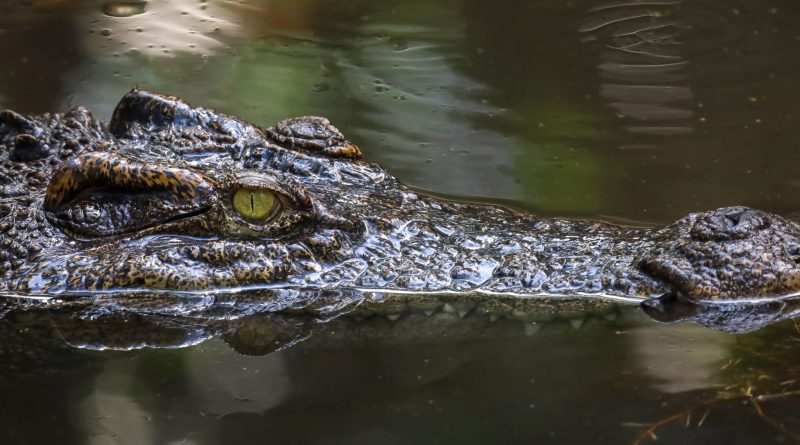
The saltwater crocodile is the only crocodilian truly at home in the open ocean. Specialized salt glands allow it to excrete excess salt, while its powerful tail and slow metabolism enable it to drift for weeks without food. Modern satellite tracking has confirmed what sailors once suspected: saltwater crocodiles regularly travel between islands, riding ocean currents like living vessels.
According to scientists, the ancestors of the Seychelles population crossed at least 3,000 kilometers of the Indian Ocean—possibly much more. This makes them some of the most accomplished long-distance travelers among all land vertebrates. Long before humans learned to navigate by stars, these reptiles were already mastering the highways of the sea.
Genetic evidence reveals an even more striking fact: saltwater crocodile populations remained interconnected over enormous distances for thousands of years. Before the Seychelles crocodiles were exterminated, the species’ range stretched more than 12,000 kilometers—from Vanuatu in the Pacific Ocean to the Seychelles in the Indian Ocean. Yet science is not the only place where the memory of these animals survives.
In Seychellois oral tradition, there are fragments of older stories—rare, half-forgotten, and passed down in altered forms. One such tale speaks of a “guardian of the shore”, a massive creature said to appear at dawn where jungle met sea. According to the story, the crocodile was not merely a beast, but a keeper of balance between land and ocean. Fishermen believed that when it lay still on the beach, the sea would remain calm, and storms would stay away from the islands.
Some versions of the legend say the crocodile arrived “from the far water,” carried by currents after great storms—an echo, perhaps, of real ocean crossings witnessed by early inhabitants. Others claim that when the last crocodile was killed, the islands lost a silent protector, and the sea became less predictable, more dangerous to those who failed to respect it.
Whether myth or memory, these stories suggest that crocodiles were not only feared, but also deeply woven into the early human perception of the islands—symbols of raw nature, power, and the uneasy boundary between safety and danger.
The story of the Seychelles crocodiles is therefore more than a tale of evolutionary endurance. It is also a cautionary narrative about forgetting. These animals survived oceans, currents, and millennia of environmental change. They crossed distances that would challenge modern ships. Yet they did not survive their brief encounter with permanent human settlement.
Today, as conservationists debate the rewilding of ecosystems and the return of lost predators, the Seychelles crocodiles stand as a silent reminder: extinction is not always the result of slow decline. Sometimes, it happens swiftly—within a single human lifetime—leaving behind only bones in museums, lines in old journals, and legends whispered along the shore.