
Flor do Mar: a floating fortress lost to the storm
The ocean in the early sixteenth century was not merely a route — it was a boundary between worlds.
Beyond the horizon lay spices, gold, unknown shores, and riches whispered about in European ports like legends. Across those waters sailed a massive, towering vessel that looked more like a floating fortress than a ship — Flor do Mar, the “Flower of the Sea.” It carried more than cargo. It carried the fortune of an empire.
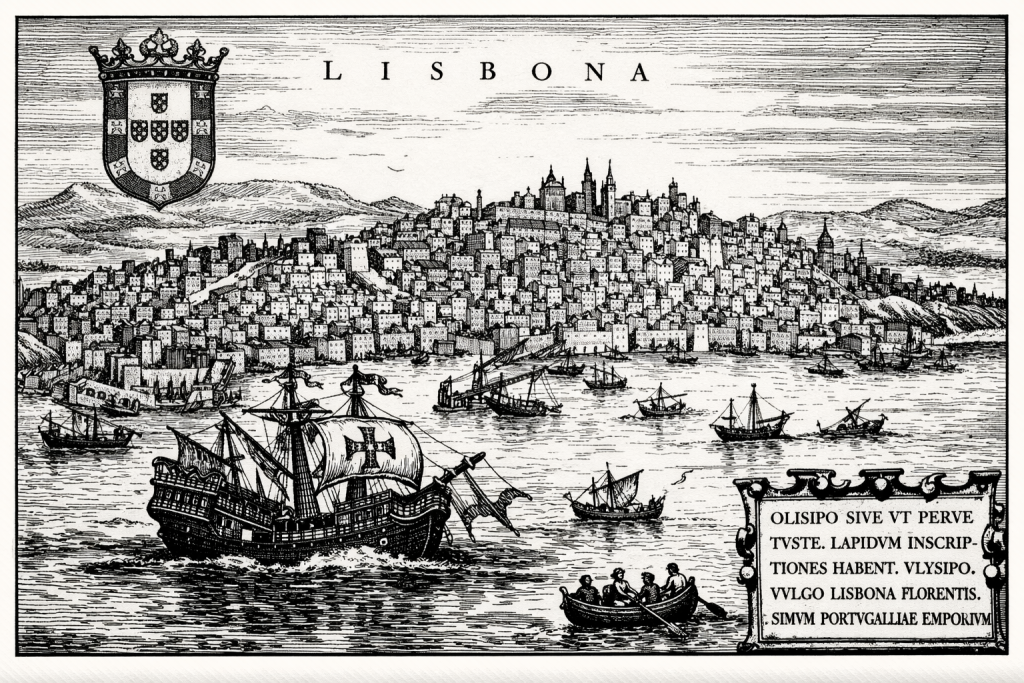
To see her in harbor was to witness power made of wood and sail.
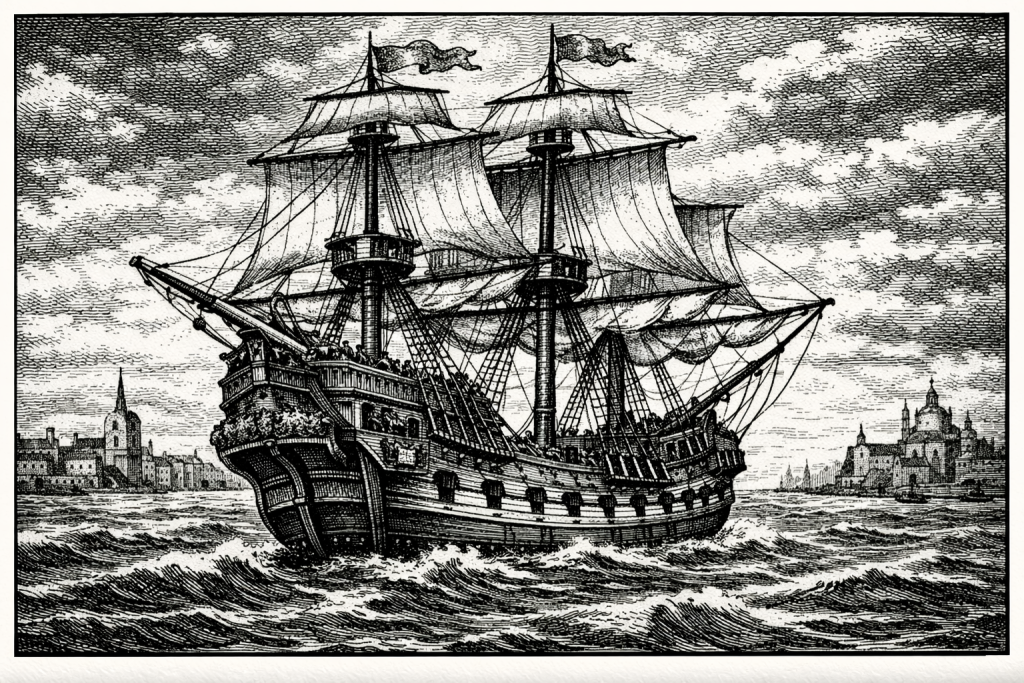
Her wide hull rose from the water like a dark wall, her sides high as ramparts. Above them stood layered decks and towering stern structures pierced with small windows like castle battlements. The stern itself rose like a carved tower, decorated with royal symbols — pride of the Portuguese crown.
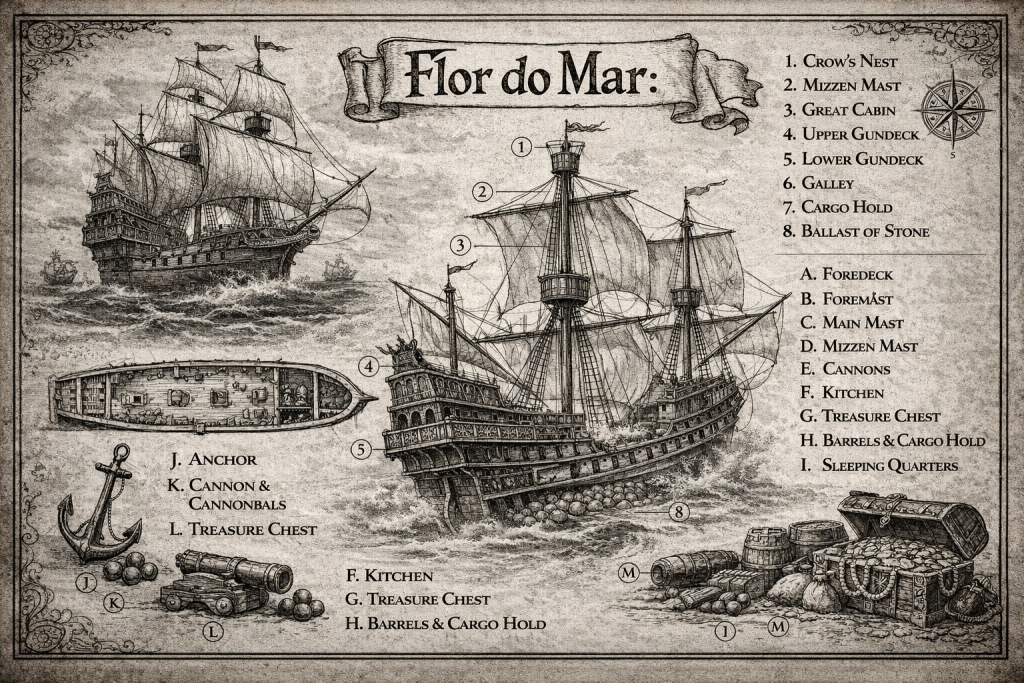
Three immense masts bore heavy canvas sails. When the wind filled them, the ship seemed to breathe — her chest swelling, ropes singing, the hull slowly pushing forward through the water. Thick rigging crossed the decks, blocks groaned under strain, and massive beams creaked beneath the weight of ship and sea alike.
Cannons lined the upper deck — bronze mouths staring out through gunports. Between them walked sailors smelling of tar and salt. Below, the lower decks sank into shadow, where damp wooden holds stretched deep into the hull — cold, dark spaces filled with cargo that made Flor do Mar the richest floating treasury of its time.
She was built to impress. To frighten enemies. To embody imperial ambition. Yet danger hid within her grandeur. Flor do Mar was too tall for her width. With every chest loaded aboard, her center of gravity rose higher. In calm seas she moved with heavy dignity, cutting waves with her bow. But when the ocean stirred, she leaned alarmingly, like a giant losing balance. The sailors felt it in every plank beneath their feet.
Even before her final voyage, storms off the Indian coast had nearly destroyed her. She had been driven onto shoals, her hull cracked, her timbers split. Again and again she was repaired, reinforced, sent back out — because no other ship could carry so much wealth. Then, in 1511, fate brought her to the heart of Asian trade: the great port of Malacca. The air there was thick with spice, smoke from markets, and voices from every corner of the known world. Silk met silver. Gems met gold. It was a crossroads of civilizations.
When Portuguese forces under Afonso de Albuquerque captured the city, they uncovered riches beyond European imagination. Gold of rulers. Silver of merchants.
Jewels glowing even in warehouse shadows. Ceremonial treasures, rare fabrics, precious relics. Day after day, chests were carried to the docks and lowered into Flor do Mar’s holds.
The ship sank lower in the water. Her beams groaned. Her hull strained. Some sailors whispered that the sea would never forgive such weight. Others crossed themselves before descending into the holds. But the treasure had to reach Portugal. When Flor do Mar sailed along the coast of Sumatra, she moved like an overloaded beast — pulled forward by wind yet already burdened beyond safety. The storm arrived suddenly. The sky darkened. Wind roared. Waves rose like walls. Sails tore. Water swept the decks. Inside the holds, the shifting cargo worsened every violent roll. Then came the sound of splitting wood. Once. Then again. In darkness the ship slammed into coral reefs. The impact threw men to the deck. The hull tore open like a wound. Water rushed in. The great overloaded giant began to sink.
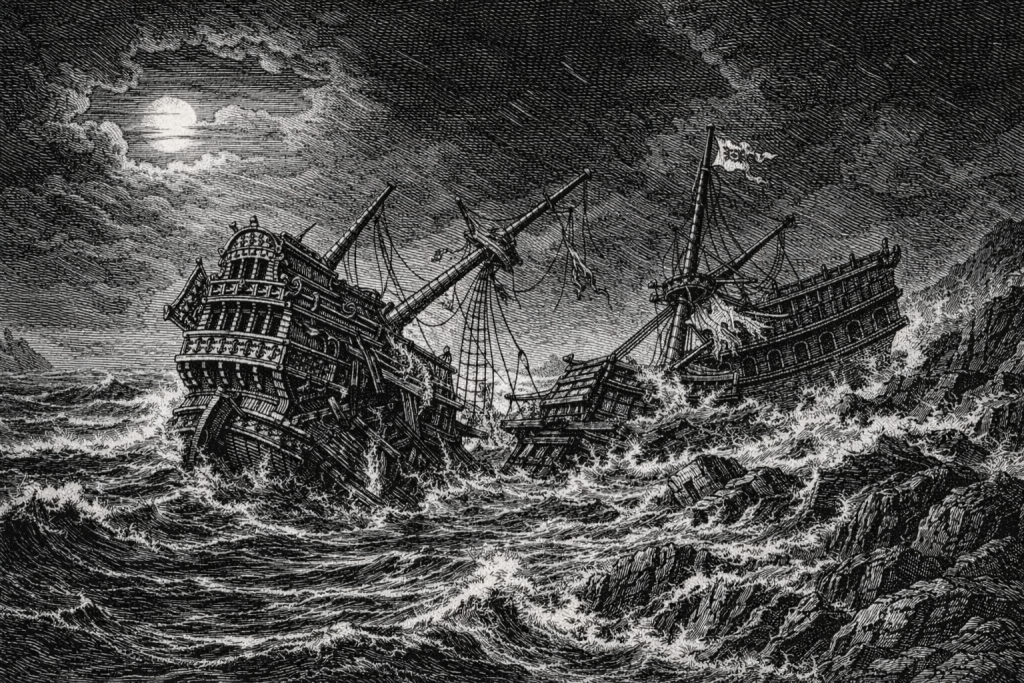
Deck after deck vanished beneath the waves. The towering stern slipped into black water. Masts snapped like matchsticks. Thus perished the ship that had been too large for her age and too heavy with human ambition. Some sailors survived by clinging to wreckage. But the treasure of Malacca disappeared with the hull. The ocean kept it.
No other ship is believed to have carried so much wealth into the deep in a single moment. For centuries, expeditions searched the waters near Sumatra — among reefs, currents, and dark depths once unreachable by humans. Anchors were found. Old wrecks surfaced. But Flor do Mar remained absent, as if the sea had erased her. It is almost as though the ocean chose to keep that fortune forever. Yet the story is not truly about gold. It is about the thin line between daring and recklessness. About empires that built giants of wood and sail, sent them into storms, and believed wealth could overpower nature. About ambition that rose higher than stability.
Flor do Mar stood at the peak of maritime engineering of her time — and became its warning. And whenever one looks at old paintings of towering carracks under full sail, it is easy to imagine her silhouette: immense, proud, beautiful, and doomed — slowly disappearing beneath the dark tropical sea.