
Santa Maria Manuela: Portugal’s “White Fleet” legend reborn under sail
There are ships that feel like floating museums—beautiful, preserved, and slightly distant. And then there are ships like Santa Maria Manuela, a vessel that still seems to breathe with the Atlantic: working rigging, taut canvas, salt in the seams, and stories that refuse to stay in the past. Built to chase cod through northern fog and ice, she has returned in the 21st century as a living ambassador of Portuguese maritime heritage—training sailors, carrying travellers, and reminding everyone who steps aboard what endurance used to mean at sea.
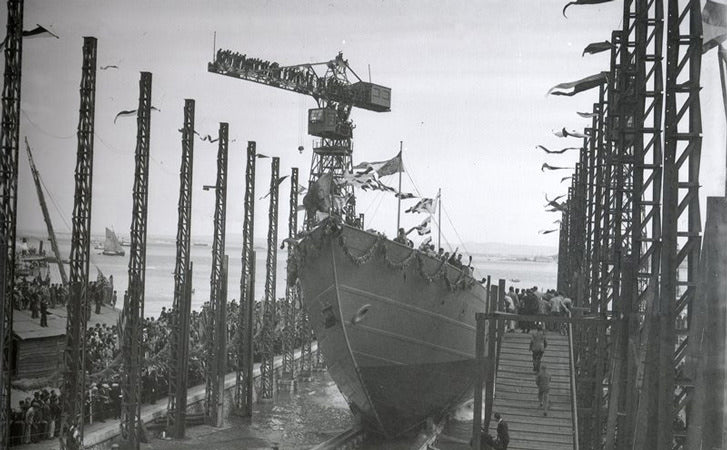
Santa Maria Manuela was launched in 1937, built in Lisbon at the CUF shipyards, in a class of vessels once central to Portugal’s cod-fishing economy. She was designed as a lugre bacalhoeiro—a cod-fishing lugger/schooner type optimized for long voyages and hard work.
For decades, her life followed the rhythm of the great seasonal expeditions to the cold North Atlantic—especially Newfoundland and Greenland. These journeys formed part of what many remember as the “Frota Branca” (White Fleet), named for the pale hulls of many Portuguese cod ships seen in northern waters
To understand what that meant, you have to picture a world before modern factory trawlers dominated the industry: long ocean crossings, strict discipline, and relentless labor. Santa Maria Manuela was associated with the traditional method of line fishing supported by dories—small boats deployed from the mother ship, with fishermen working the sea almost at water level, often surrounded by fog, swell, and bitter cold. It was dangerous, exhausting, and deeply woven into coastal communities—especially around places like Ílhavo and the Aveiro region, where cod fishing became identity as much as livelihood.
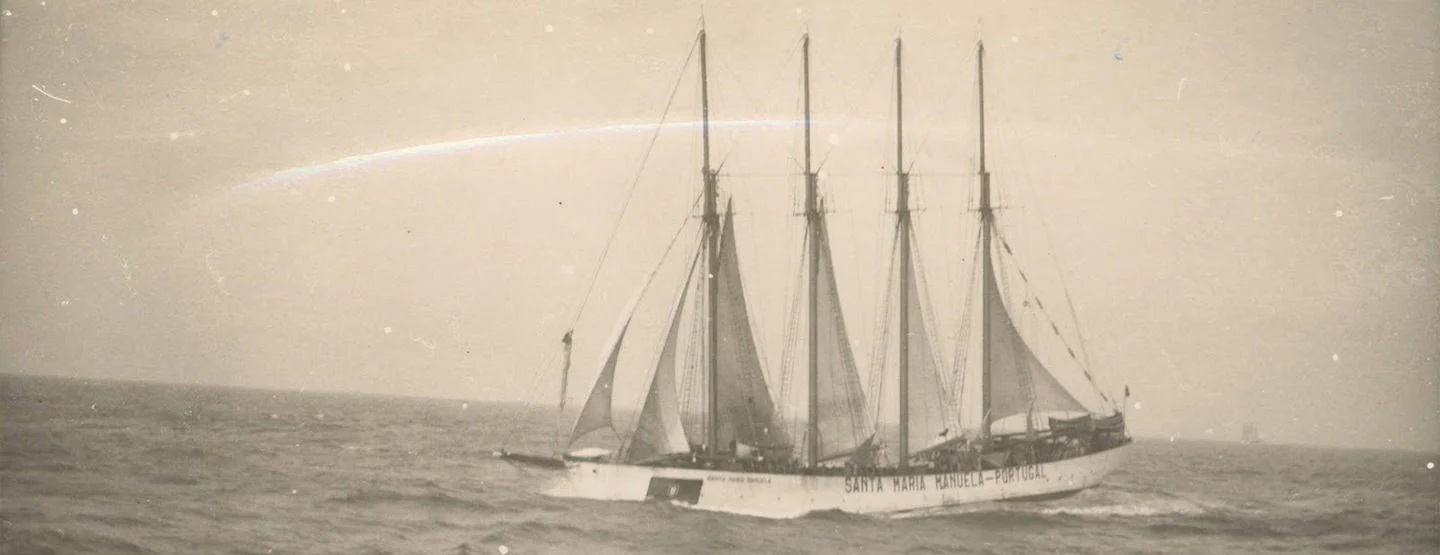
Like many working vessels of her generation, Santa Maria Manuela did not remain frozen in time. Over the mid-20th century, cod fleets modernized. Ships were modified, engines and onboard systems improved, and working routines changed to keep up with shifting regulations, economics, and technology.
But by the late 1980s and early 1990s, the era that made ships like Santa Maria Manuela essential was fading fast. The vessel was eventually considered obsolete, and in 1993 she was dismantled—leaving only the steel hull. For many historic ships, that moment is the end of the story: a few photographs, a few memories, and then silence.
Santa Maria Manuela’s survival is one of the most remarkable chapters in modern Portuguese maritime preservation. A foundation project was created in 1994 to recover the ship, bringing together multiple institutions and community efforts. Yet ambition and affection don’t always come with budgets big enough to rebuild a ship. The true turning point arrived in 2007, when Pascoal purchased the remaining hull and began a major restoration in the Aveiro region.
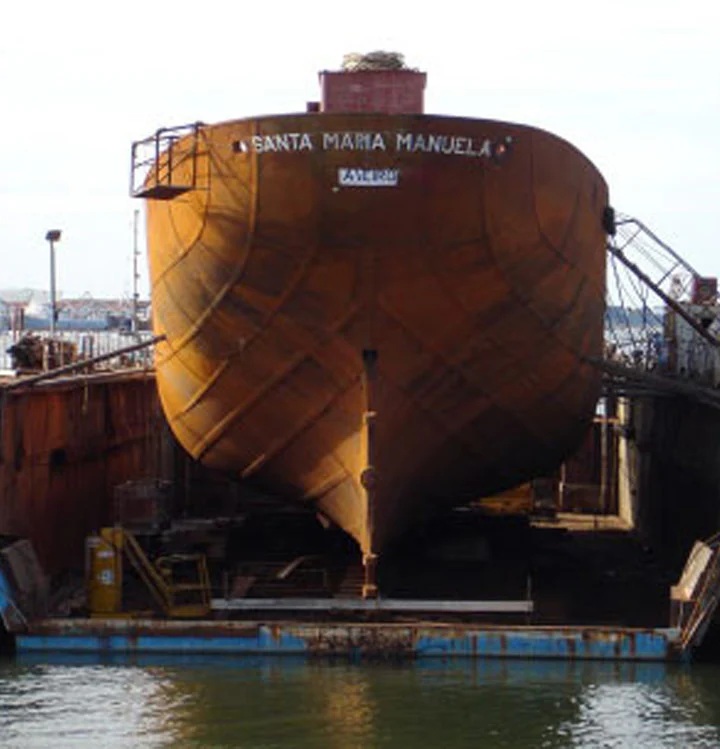
The renovation took four years and aimed not merely to “refit” the ship, but to restore her character and presence as a tall sailing vessel. The result was a rebirth: on 10 May 2010, described as her “new life,” Santa Maria Manuela approached the port of Aveiro under sail, her hull painted white again, returning to the waterline as something more than an artifact—she was a working sailing ship once more.
In November 2016, Santa Maria Manuela was acquired by Recheio, part of the Jerónimo Martins Group. Jerónimo Martins itself has publicly referenced the acquisition, describing the ship as an emblematic vessel connected to the old White Fleet.
A ship’s revival is proven not only in glossy brochures, but also in how she behaves among her peers—out at sea, and in the company of other rigs. Santa Maria Manuela appears in international tall ship contexts and directories, reflecting her role as an active training vessel rather than a static display.
She has also been present in major maritime gatherings and public open-ship moments. Portuguese archival media has noted her alongside the Navy’s Creoula during public visits in Lisbon, marking the cultural importance of these sister ships in the national imagination.
With that transition, her purpose became outward-facing. Instead of carrying the weight of salted cod and the fatigue of a campaign, she began carrying something else: people—guests, trainees, educators, and sea-lovers seeking an experience that blends tradition with modern seamanship. Today she is promoted as a platform for hands-on sailing, sail training, expeditions, and voyages built around an emotional relationship with the ocean and environmental awareness.

And beyond official listings, she’s become something rare: a ship people recognize by feeling. When she enters a harbor under full canvas—four masts drawing the wind—she doesn’t just arrive; she stages a reminder of what coastal Europe once looked like when sail still ruled the horizon.
Many historic ships are famous because they were always famous—royal yachts, naval icons, or explorers’ flagships. Santa Maria Manuela is remarkable for something more human: she represents a whole class of working people and working ships that powered a nation’s relationship with the sea.
What are Santa Maria Manuela’s “last stories”? They’re unfolding right now, because she is not a retired relic—she’s a working itinerary, a moving classroom, and, for many guests, a once-in-a-lifetime threshold moment between land-life and sea-life.
Her operators frame the ship’s contemporary role around ocean connection and environmental consciousness, aligning sail-powered travel with learning and awareness rather than simple luxury.
And her voyage programming shows just how far the ship has travelled metaphorically: from cod routes to island-hopping and longer passages, including Atlantic and European coastal legs (with public schedules published for upcoming seasons).
Step aboard today and you’ll still find the language of seamanship—sails set and trimmed, watches kept, ropes coiled properly, wind read like weathered handwriting. But you’ll also find a different kind of cargo: curiosity, attention, and a renewed respect for the ocean as something more than scenery.
Santa Maria Manuela’s real legacy is not only her specifications—though they’re impressive—nor even her beauty under sail. It’s her continuity. She connects Portugal’s hard maritime past to a modern future where ocean literacy, skills, and stewardship matter more than ever.
She proves that preserving heritage doesn’t have to mean freezing it. Sometimes preservation means giving a ship back her wind—so she can keep writing new stories on the water.
Footage of Santa Maria Manuela 01 January, 2026: