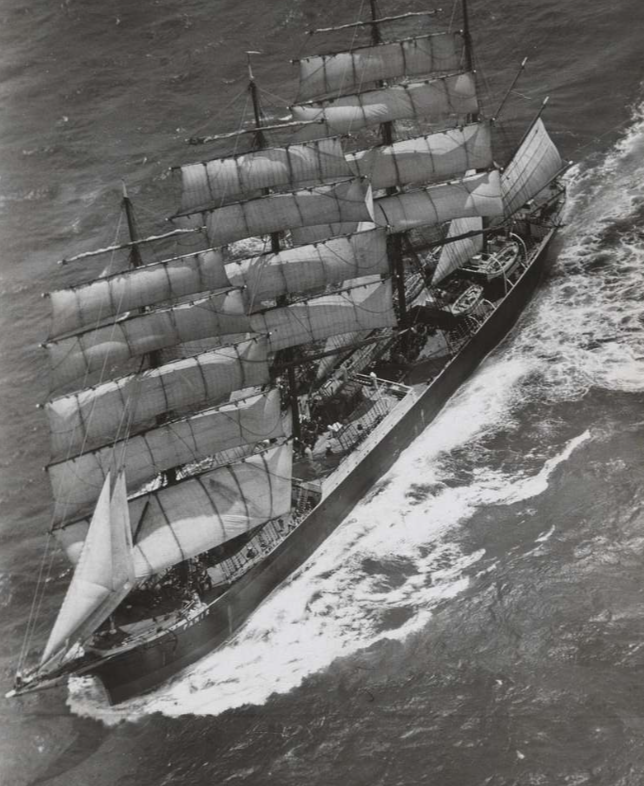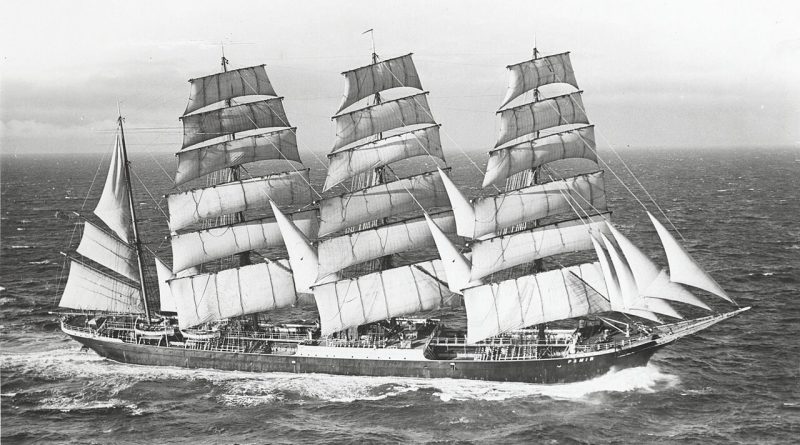
Wings of the ocean: barque “Pamir”
Imagine the Atlantic of those years.
At the beginning of the twentieth century, the ocean did not yet belong to machines. The seas were still ruled by the wind. Along the world’s trade routes sailed windjammers — the last giants of an age when man stood alone against the elements.
Their story began in the late nineteenth century, when the German shipping company of
F. Laeisz started building extraordinary vessels. Almost all of them were given names beginning with the letter “P”: Pamir, Potosi, Preussen, Padua, Passat, Pommern, Priwall, Peking, Parma, Persimmon, and many others.
Over time, sailors began calling them the Flying P-Liners.
And it was not a beautiful exaggeration.
These ships were truly considered the fastest and most reliable large sailing vessels of their time. They sailed where many captains preferred not to risk going: around Cape Horn, across the South Atlantic, through the icy latitudes of the Roaring Forties. They crossed oceans so quickly that they sometimes reached port ahead of steamships.
While the world was turning to steam and diesel, the Flying P-Liners continued to prove that wind was still capable of competing with the industrial age.
They were defined by an almost unbelievable discipline. Steel hulls. Perfectly calculated sail plans. German precision in construction. Elite captains and crews.
Many of them had no engines at all.
If the wind died, the ship simply stopped in the middle of the ocean.
If a storm began, the men were left alone with the sea.
There was no “start engine” button on these ships. There was only a rope that had to be held. A sail that had to be set. And an icy wind that did not care whether you survived or not.
Thus began the story of the last aristocrats of the sailing ocean.
And the first among them was Pamir.
September 1957. North Atlantic.
For several days the ocean had been restless, but now it was beginning to grow truly angry. The waves rose higher and higher, and the wind tore white foam from their crests and hurled it into the darkness. The sky disappeared — there was only the storm. And somewhere within that chaos sailed the four-masted barque Pamir — one of the last great sailing ships on Earth.
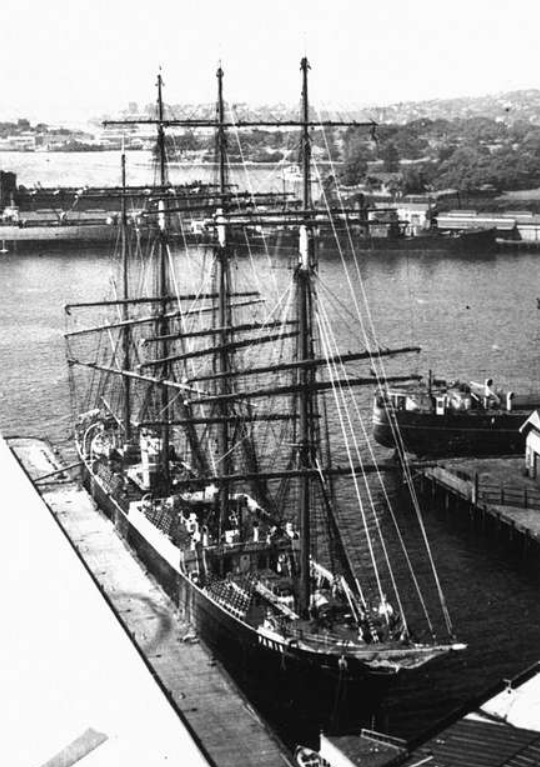
Its story had begun long before that night, back when the ocean belonged to the wind rather than engines.
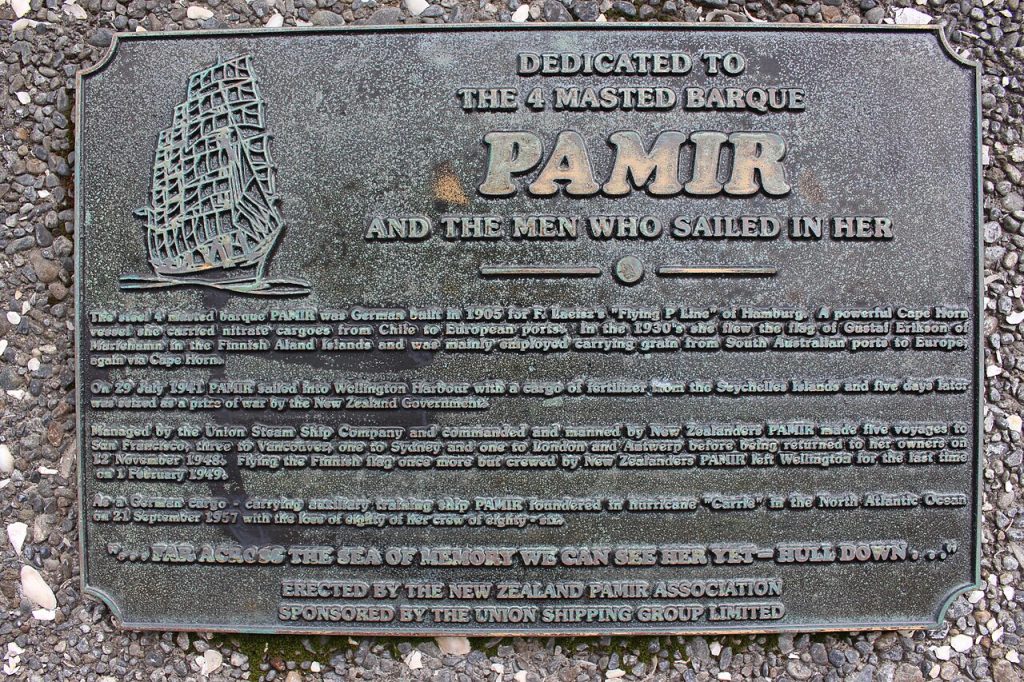
Pamir was built in Hamburg in 1905 at the Blohm & Voss shipyard. She was not a romantic wooden ship from adventure novels, but a true steel giant of her age. Four masts, thousands of square meters of canvas, a powerful hull, and almost no comfort. She belonged to F. Laeisz — the owners of the legendary Flying P-Liners.
Sailors spoke of them with both admiration and unease. These ships sailed where many steamships preferred not to risk going: through the South Atlantic, around Cape Horn, and across the icy waters of the Roaring Forties. They carried Chilean nitrate, Australian grain, coal, and steel. Their speed astonished even the captains of steam-powered vessels.
But above all, these ships demanded almost the impossible from men.
Life aboard Pamir was always hard, even in calm weather. Every rope weighed like a chain. Every wet sail became a living thing struggling to tear itself free from human hands. Sailors climbed the yards at the height of a multi-story building — under freezing rain and during violent rolling seas. Sometimes, at night, the ship heeled so sharply that men literally hung above the black water, gripping the rigging with numb fingers.
One sailor later recalled:
“In a storm, you stopped understanding where the sea ended and the sky began.”
Especially feared was Cape Horn — the place sailors called the graveyard of ships. There the oceans collided and storms raged for weeks. Waves rose like moving cliffs. Captains of the Flying P-Liners disliked even speaking the name aloud. There were countless superstitions. Some refused to shave while rounding the Horn, believing it brought bad luck.
On certain voyages, the crew wore wet clothes for weeks. Everything was damp — the deck, the ropes, the bunks, the cabin walls. Saltwater seeped everywhere. But this was precisely what made it a school of the true sea.
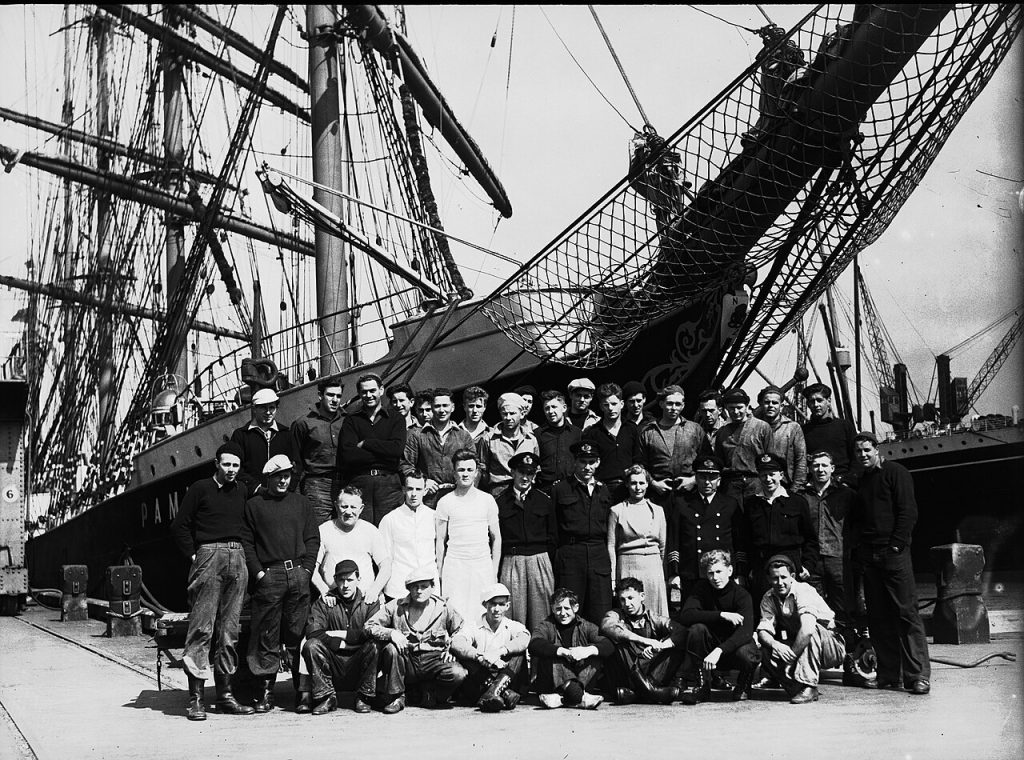
By the middle of the twentieth century, Pamir already looked like a ghost from another age — majestic, but alien in a world of diesel engines and turbines. While the oceans filled with modern ships equipped with engines and radar, this enormous barque still sailed under canvas, as if refusing to acknowledge the new era. She was preserved as a training ship. Young cadets learned the real sea there: climbing the yards, tying knots in darkness, reading weather from clouds, and listening to the wind as if it were a living creature.
Old captains believed:
“Whoever has served on a sailing ship can handle any sea.”
Old maritime traditions still survived aboard her. It was said that the captain disliked anyone whistling on deck — sailors believed whistling could summon a storm. There was a piano in the saloon, and after exhausting watches the crew sometimes gathered to sing old songs together. Before bad weather, even the ship’s rats became restless, scurrying anxiously through the holds as if sensing the storm before the men did.
In the summer of 1957, Pamir left Buenos Aires bound for Germany with a cargo of barley. On board were experienced sailors, officers, and dozens of cadets. Many of them were crossing the Atlantic for the first time.
The greatest danger was not the wind, but the cargo itself. The barley was carried loose, and in heavy seas it could shift inside the hold. For a sailing ship, this was deadly. Once the cargo shifted to one side, the vessel developed a permanent list and gradually lost stability.
On September 21, Pamir entered the path of Hurricane Carrie near the Azores.
The wind became a continuous roaring force. Waves crashed over the deck like walls. Some survivors later said:
“The sea no longer looked like water. It looked like moving mountains.”
The list grew worse. Sails tore apart. Water entered the hull. The shifted cargo could no longer be corrected. The ship began to die slowly.
The radio operator sent distress calls:
“Heavy list…”
“Situation critical…”
“Immediate assistance required…”
And then the radio fell silent.
When Pamir went under, only six of the eighty-six people aboard survived. The rest vanished with the ship into the cold North Atlantic.
With Pamir, it was not merely a crew that disappeared — an entire era went down with her.
Newspapers around the world wrote not only about a disaster. They wrote about the end of the last great age of ocean sailing ships — a time when man still faced the elements directly, without engines, without electronics, without the right to make mistakes.
Her sister ship, the barque Passat, still stands today in Travemünde as a museum ship. Silent and motionless, as though asleep. But if you step onto her deck on a windy evening and listen carefully to the rigging, it seems as if the wind still lives there. As if the ship still remembers the ocean.
Sometimes sailors tell an old legend: in the stormy regions of the North Atlantic, the silhouette of a four-masted barque with dark sails can still be seen. It appears through the fog and disappears again with the rain.
And if you listen closely, you can hear the song of her rigging.
Sometimes history ends not with a gunshot, but with a gust of wind.